 Business · News 61
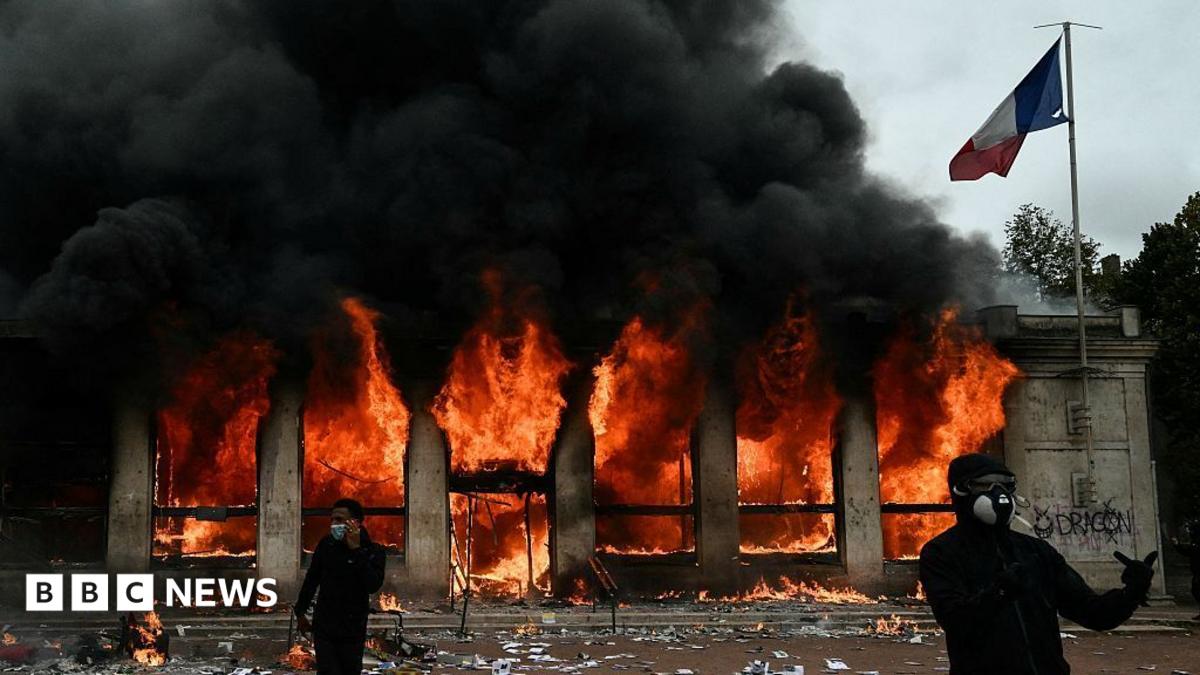
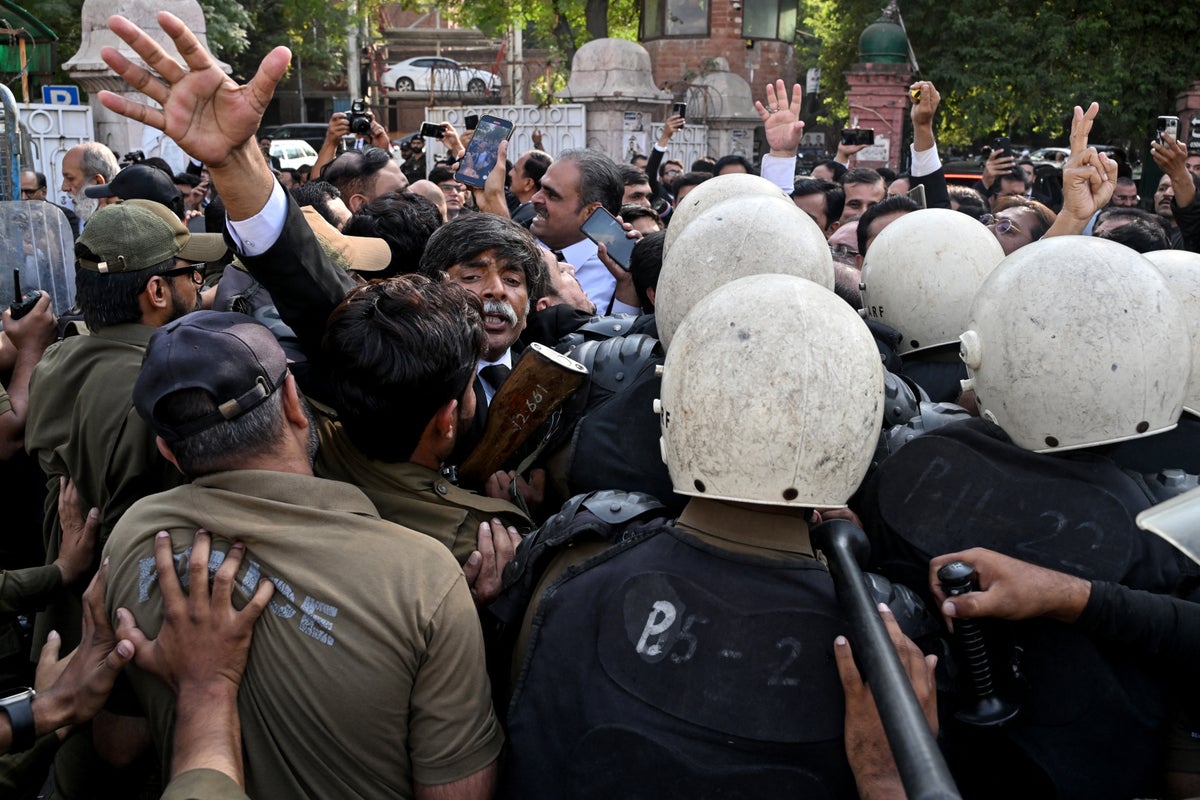
Only authorised union protests will be allowed in French towns and cities on Saturday, President Emmanuel Macron has said, after demonstrations across the country turned violent last weekend. Speaking as some cities including Lyon and Nice imposed complete bans, Macron said "illegitimate" protests would not be allowed but unions would be offered alternative routes so that businesses could be protected. Big demonstrations against the high cost of living and school conditions were overshadowed last Saturday by riots and looting that saw business and historic buildings destroyed.
Interior Minister Jean-Didier Berger said law enforcement would be 20% higher than it was last weekend, after the government had promised a "massive" police deployment. At least 2,500 people have been arrested across France since the disorder broke out and Macron met intelligence services and ministers on Thursday, to prepare for the next national day of protests on Saturday. "The general recommendation is that there should be no demonstrations.
Those who want to continue to demonstrate, when they are trade union organisations, will have alternative routes proposed by the prefects," the French president announced. "When they're not union organisations, wherever possible, they'll be banned." He attacked what he called "political and even seditious acts organised by far-left groups that aim to bring down the Republic". Curfews were imposed in several cities in the aftermath of the weekend rioting, and Macron said the government wanted a return to calm.
The gilets jaunes (yellow-vest) movement was behind many of last weekend's protests and Paris authorities have said several of their proposed marches have been banned. In Lyon, France's third-biggest city, regional authorities have imposed a blanket ban on demonstrations. "In light of the mobilisation that is circulating and in view of the events of 17 October, the prefect has decided to prohibit by decree any demonstration in the city of Lyon this Saturday," the Rhône prefecture said in a statement.
Similar announcements have been made in Toulon on the south coast, the centre of Rouen in the north-west, and Grenoble in the east. Partial curfews variously restricting the movement of young people and gatherings have been in place this week in cities including Marseille, Bordeaux, Nice and Lyon in the south as well as Lille and other towns in the north. Prime Minister Sébastien Lecornu promised a "massive" deployment of police officers this week to deal with any unrest this weekend, but some officers have told French media they are not trained to deal with large crowds.
Around 550,000 thousand people took part in demonstrations on 17 October to protest rising fuel prices and the cost of living, which have escalated after weeks of student protests . Marches were largely peaceful and took place in several major French cities, including Paris, backed by unions, gilets jaunes and student groups. But they were marred by scenes of violence, looting and destruction.
Lyon's tourism office was set on fire by demonstrators during last weekend's protests. Mayor Grégory Doucet said the burning of the office, housed in a 19th-Century building, was "a tragedy". In the city of Limoges, the clock tower and parts of the roof of the ornate city hall were engulfed in flames before collapsing on Saturday.
A second suspect aged 66 was arrested on Thursday, after a man in his 30s was detained on suspicion of the attempted murder of police officers who were in the city hall when the fire started. The iconic Place de la République was vandalised in the capital, Paris, when groups of rioters took over parts of the city, wreaking havoc. Following the unrest, France's interior minister Laurent Nuñez tendered his resignation, which was rejected by President Macron.
The Élysée Palace asked him instead to look at how to make France's streets safer and bring rioters to justice. Nuñez said his teams had forecast 200,000 demonstrators, a figure much lower than the 550,000 estimated to have gathered. The unrest has come as Macron enters the final months of his presidency, with elections scheduled for 18 April and 1 May next year.
Source: BBC