 Business · News 61
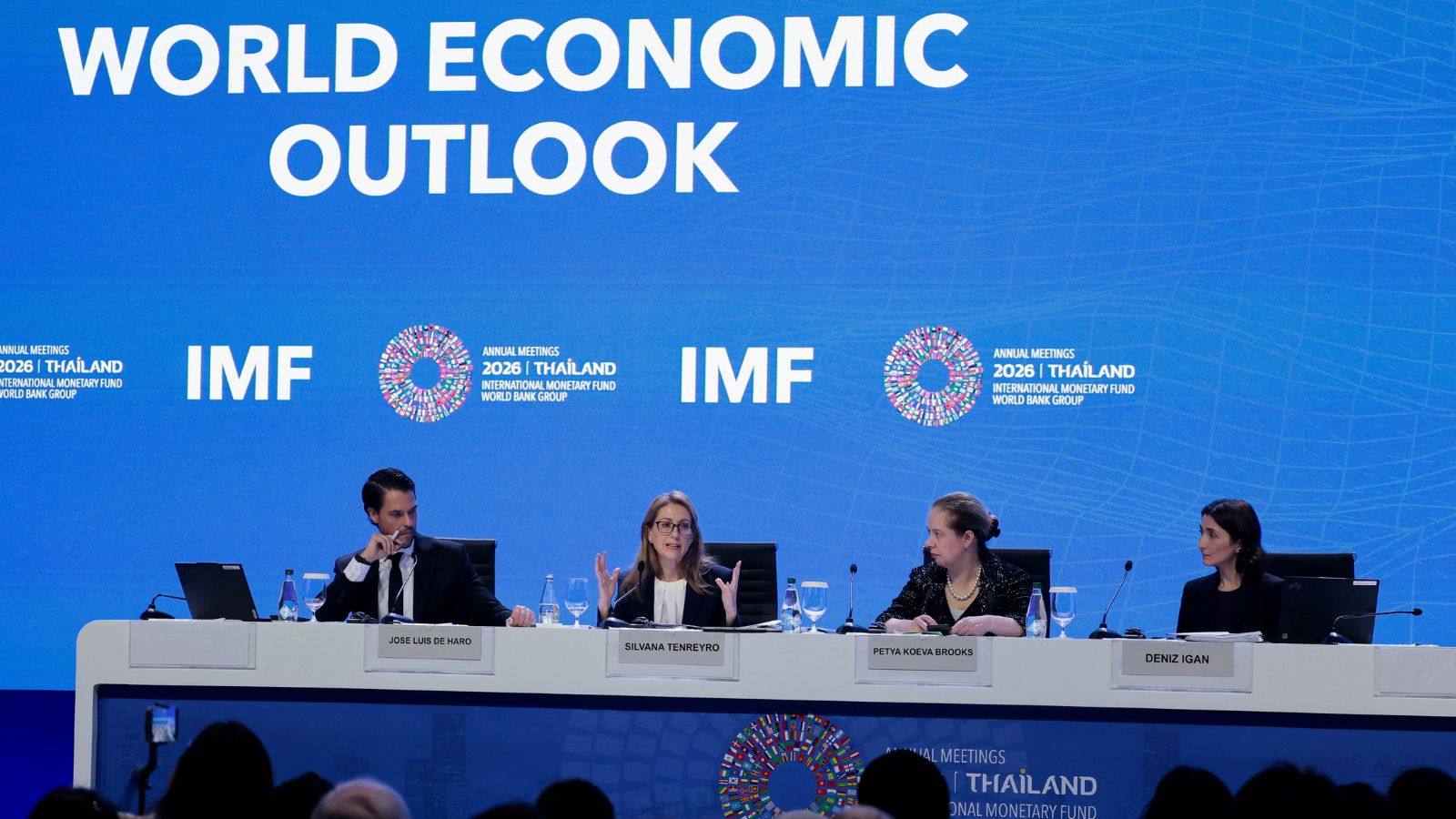
The global economy is facing a fresh set of challenges as an artificial intelligence-driven investment boom collides with an energy shock triggered by the West Asia war, rising government debt and growing financial market vulnerabilities. These were among the key takeaways from the International Monetary Fund and World Bank Group's annual meetings in Bangkok, Thailand, which concluded on October 18. The meetings brought together finance ministers, central bankers and policymakers from around the world to discuss an uneven global recovery, the implications of AI, the challenge of creating jobs in developing economies, and more.
Here are five key takeaways from the meetings: Global growth remains resilient, but risks are tilted to the downside The IMF's October World Economic Outlook projected global economic growth at 3.1% in 2026, before a modest acceleration to 3.4% in 2027. Global headline inflation is expected to rise to 4.7% this year before easing to 4.1% in 2027. The IMF warned that the apparent resilience of the global economy masks widening differences between countries.
Economies benefiting from AI-related investment or favourable trade conditions are better placed to withstand the current environment, while energy-importing and lower-income economies face greater pressure. Further geopolitical escalation, renewed trade tensions, fiscal vulnerabilities and a reassessment of AI investment expectations remain key downside risks. AI is becoming a source of both growth and financial instability AI emerged as a central theme at the meetings, with policymakers weighing its potential to boost productivity against the risks of excessive investment, market corrections and disruption to employment.
The technology boom has supported investment and economic activity, but central bankers warned that the spending on data centres, semiconductor chips, electricity infrastructure and other AI-related projects could add to inflationary pressures before the promised productivity gains materialise. Rising demand for capital, combined with increased government borrowing, is also pushing up borrowing costs. Central bankers discussed the possibility that interest rates may need to remain higher for longer.
The IMF's Global Financial Stability Report, released during the meetings, flagged the possibility of an AI-related market correction if investment or profit expectations disappoint. It also highlighted rising sovereign bond yields and cyber incidents as potential sources of financial instability. IMF Managing Director Kristalina Georgieva called for international cooperation to manage AI's rapid development and ensure that lower-income countries are not left behind.
Rising debt is squeezing developing economies Mounting public debt and higher debt-servicing costs emerged as another major concern, particularly for countries with limited fiscal room to support growth and protect vulnerable households. Georgieva urged the US and other wealthy economies to address their debt burdens, warning that economic growth alone would not deliver the fiscal adjustments needed quickly enough. The IMF chief's comments came as rising bond yields added pressure to global financial markets.
Developing countries are also facing a tougher financing environment as official development assistance declines and borrowing becomes more expensive. According to the World Bank, official development assistance fell 23% in 2025, the largest annual decline on record, while developing countries' external debt reached $12.3 trillion. World Bank President Ajay Banga called for a development financing model that combines public funding, private investment, philanthropy and technology to address countries' needs.
The bank said it mobilised a record $112 billion in private capital in fiscal 2026, more than three times the amount mobilised four years earlier. However, the challenge remains particularly acute in low-income and fragile economies, where attracting commercial investment is more difficult. Creating jobs will be the defining development challenge The World Bank put employment at the centre of its agenda, warning that the number of young people entering the workforce in developing economies will far exceed the jobs expected to be created.
Banga said 1.2 billion young people in developing countries would reach working age over the next 10 to 15 years, while only about 400 million jobs are projected to be created. The bank's proposed response involves mobilising more private capital, improving the investment climate, expanding access to infrastructure and technology, and supporting small businesses. It is also exploring ways to package development investments so that institutional investors, including pension funds and insurers, can participate more easily.
The broader challenge is to translate investment and technological progress into employment and higher living standards, rather than allowing the benefits of economic transformation to accrue disproportionately to wealthier countries and businesses. Asia faces the twin pressures of expensive energy and uneven AI gains Asian economies are navigating the energy shock alongside the opportunities and risks associated with the technology boom. The IMF said the region's dependence on imported oil and gas, much of it sourced from the Middle East, has left several economies exposed to higher energy costs.
Countries have responded by diversifying energy supplies, reducing demand, drawing down inventories and introducing measures to cushion the impact on households and businesses. At the same time, AI-related investment has provided a significant boost to some major Asian economies. The IMF projected Asia-Pacific economic growth to slow to 4.8% in 2026 from 5% in 2025, before easing further to 4.4% in 2027, according to its regional outlook discussed during the meetings.
The region also faces financial market risks. Investors have become increasingly sensitive to the sustainability of AI-related valuations and the prospect of higher interest rates, exposing emerging markets to sudden shifts in capital flows. Tags Home / Economy News / IMF-World Bank meetings: Energy shocks, AI optimism, and other key takeaways on global economy
Source: CNBC TV18