 Business · News 61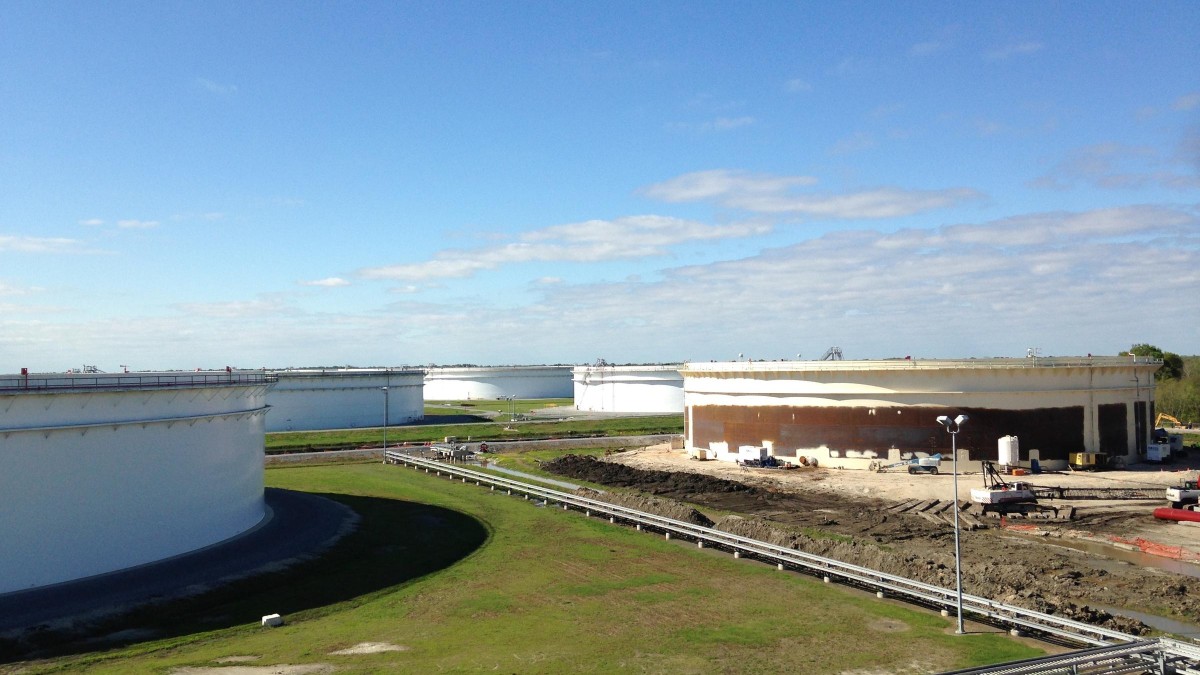
Canada-U.S. oil ties remain exceptionally strong, with more than 90% of Canadian crude exports going to the U.S. and U.S. imports exceeding 4 million barrels per day (bpd) in the first half of 2026. Canada is expanding its export infrastructure to meet growing production demands. Enbridge’s Houston Oil Terminal, operational since July, provides direct access to U.S. Gulf Coast refineries, which process heavy crude. This terminal complements Trans Mountain’s expansion, which nearly tripled pipeline capacity to 890,000 bpd, with further increases planned to 90,000 bpd by Q4 2027 and 210,000 bpd by 2028, primarily for Asian markets.
Energy trade between Canada and the U.S. has been largely untouched by escalating tariffs, as both countries explicitly excluded oil from recent trade disputes. In 2024, Canada exported crude oil, natural gas liquids (NGLs), and natural gas worth $160 billion, with Canadian oil contributing over 60% of U.S. crude imports. By 2025, Canada exported a record 4.3 million bpd, with 90% of that going to the U.S. U.S. imports averaged just over 4 million bpd in H1 2026, marking a 6.4% increase from June 2025. The Midwest remains the largest U.S. market for Canadian crude, absorbing around 2.75 million bpd in 2025 and 2.92 million bpd in H1 2026, while Gulf Coast refineries process roughly 337,000 bpd of Canadian heavy crude, down from 526,000 bpd in 2024.
The U.S. Gulf Coast’s refinery cluster, the largest in the world for heavy, sour crude, has historically processed Venezuelan and Mexican crude. However, declining Mexican production and uncertain Venezuelan supply, along with geopolitical risks from the Iran conflict, have made it harder for U.S. refiners to replace Canadian heavy crude. The Permian Basin’s light crude production offers only partial substitution due to processing mismatches. Enbridge’s Houston Oil Terminal (EHOT) is designed to increase Canadian heavy crude access to Gulf Coast refineries, with plans to expand storage capacity from 2.5 million to 15 million barrels. Meanwhile, Canada is diversifying exports by adding Pacific route capacity through Trans Mountain’s expansions, targeting Asian markets.
Canada’s retaliatory tariffs on U.S. goods (15%, 25%, and 50%) have not disrupted oil trade, as energy was explicitly excluded from U.S.-Canada tariffs. The U.S. imposed Section 338 tariffs on Canadian goods, but energy, potash, and critical minerals remained exempt, preserving cross-border oil trade.